 by
Not every SUV is designed to handle challenging landscapes. While many modern vehicles focus on luxury, advanced technology, and urban convenience, some are engineered with a much more demanding purpose: conquering difficult terrain.
From rocky mountain trails and muddy forest roads to remote wilderness routes, serious off-road vehicles need more than an attractive exterior. They require dependable mechanical components, capable four-wheel-drive systems, sufficient ground clearance, and the durability to withstand demanding conditions.
Fortunately, several manufacturers continue to build vehicles that combine rugged engineering with modern comfort and everyday usability.
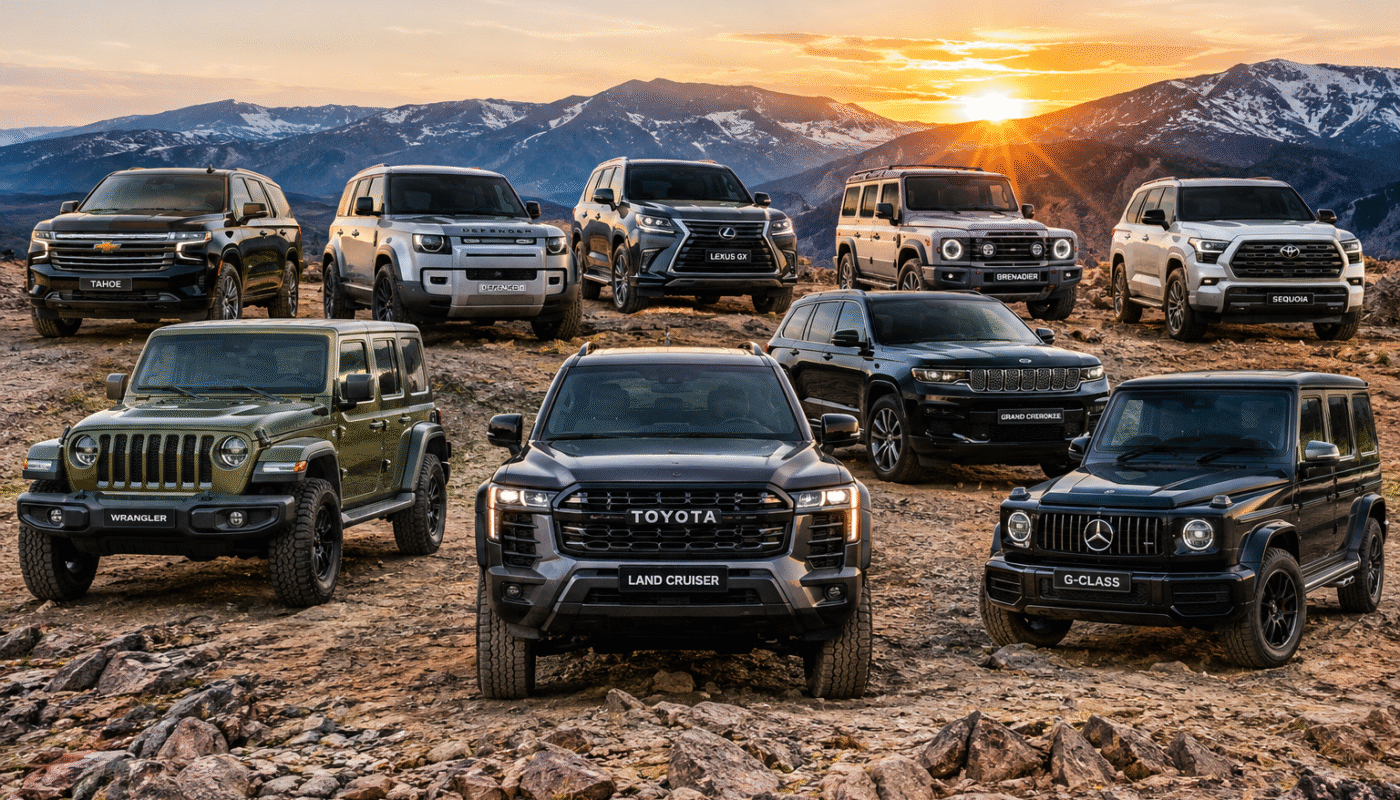
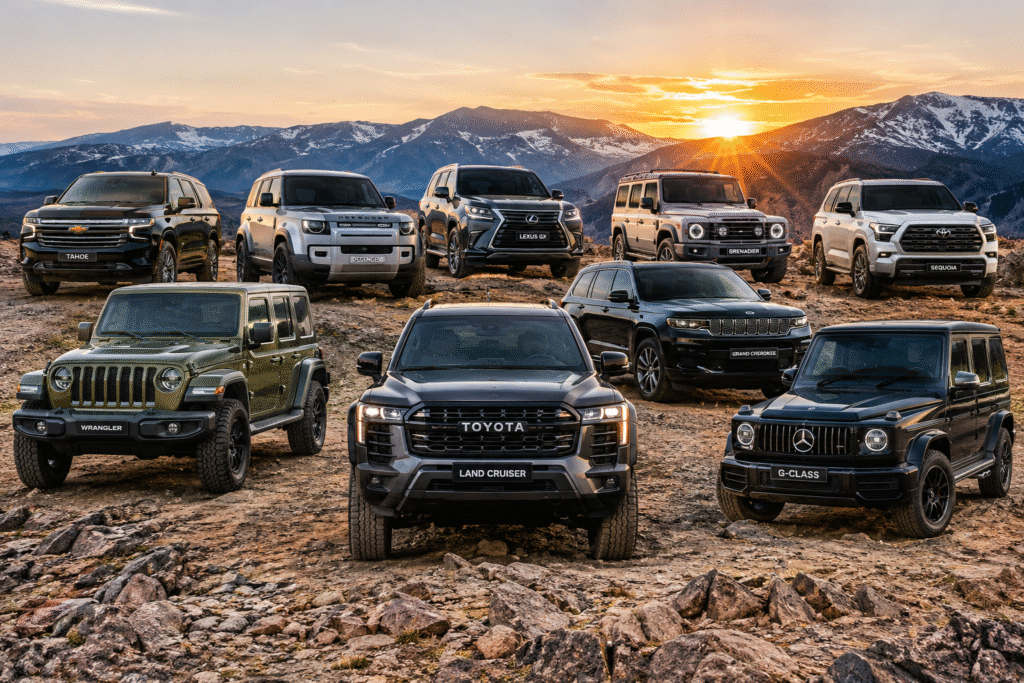
In this article, we explore nine impressive 4×4 SUVs that offer different approaches to off-road capability. Some prioritize mechanical toughness, others combine premium luxury with advanced terrain technology, while a few deliver the practicality required by large families and adventure enthusiasts.
Let’s take a closer look at what makes each of these vehicles special.
1. Toyota Land Cruiser – A Legendary Name in Off-Road Reliability
The Toyota Land Cruiser has earned an extraordinary reputation among off-road enthusiasts, explorers, and expedition drivers. Known for its rugged construction and long-standing reliability, it is frequently considered one of the most dependable choices for traveling through remote environments.
Its traditional boxy styling communicates its practical purpose, while its commanding driving position provides excellent visibility when navigating challenging roads.
Under the hood, its hybrid powertrain delivers strong low-speed torque, making difficult climbs and rocky trails easier to manage. The upright windows and elevated seating position also make everyday driving more manageable than its substantial exterior might suggest.
Inside, passengers benefit from comfortable seating, particularly in the second row. However, the absence of a practical third row in the configuration discussed makes it less suitable for larger families.
Key Advantages:
- Strong off-road capabilities and mechanical durability.
- Excellent long-term resale value.
- Useful low-speed torque for challenging terrain.
- Comfortable second-row passenger accommodation.
- Relatively civilized fuel consumption for a heavy-duty 4×4.
Potential Disadvantages:
- Noticeable wind noise during highway driving.
- Interior equipment can feel relatively basic for its price.
- Limited third-row practicality.
Best For: Remote-area explorers, overlanding enthusiasts, and drivers who prioritize durability over unnecessary luxury.
2. Jeep Wrangler – An Icon Designed for Serious Trail Adventures
Few vehicles represent traditional American off-roading as strongly as the Jeep Wrangler. Its military-inspired appearance, removable doors, and distinctive body design have made it instantly recognizable around the world.
The Wrangler is particularly attractive to enthusiasts who value genuine off-road engineering, especially its solid-axle design and impressive wheel articulation.
Its engine delivers strong performance, but the driving experience changes considerably when moving away from dirt trails. On ordinary roads, drivers may notice body movement, steering corrections, and a relatively bouncy ride.
Urban driving can also become challenging because of its limited maneuverability in tight spaces.
Practicality is another compromise. The cabin is relatively compact, and there is no third-row seating. Instead, the Wrangler focuses on delivering an adventurous driving experience.
One particularly useful feature is its removable doors and washable interior surfaces, which make cleaning after muddy adventures considerably easier.
Key Advantages:
- Excellent off-road geometry and wheel articulation.
- Removable doors for an open-air experience.
- Washable interior surfaces.
- Strong reputation among off-road enthusiasts.
- Excellent potential for trail customization.
Potential Disadvantages:
- High fuel consumption.
- Firm and sometimes uncomfortable everyday ride.
- Limited interior space.
- No third-row seating.
- More demanding highway driving experience.
Best For: Dedicated off-road enthusiasts who want an authentic trail-focused SUV rather than a conventional family vehicle.
3. Land Rover Defender – Luxury Meets Genuine Off-Road Capability
The Land Rover Defender offers an interesting combination of sophisticated luxury and traditional off-road heritage.
Unlike vehicles that concentrate almost entirely on rugged utility, the Defender is designed to appeal to drivers who want a premium everyday SUV without giving up serious adventure capabilities.
Its imposing exterior styling gives it a distinctive presence, whether parked outside an upscale hotel or navigating a challenging wilderness route.
Its powerful engine options provide smooth acceleration and confident highway performance. At lower speeds, advanced terrain-management technology helps the vehicle adapt to different surfaces and difficult driving conditions.
One of its biggest advantages is its versatility. Modern camera systems make maneuvering in crowded urban environments easier, while its comfortable suspension delivers a refined highway experience.
Inside, the Defender features premium materials and a sophisticated cabin. However, third-row seating in shorter configurations can feel cramped.
Its adjustable air suspension is particularly valuable when additional ground clearance is needed for off-road driving.
Key Advantages:
- Excellent combination of luxury and off-road ability.
- Advanced terrain-management technology.
- Comfortable highway driving.
- Adjustable air suspension on equipped versions.
- Strong engine performance.
Potential Disadvantages:
- Higher fuel expenses with powerful engine options.
- Complex electronic systems can increase maintenance requirements.
- Limited third-row comfort in shorter versions.
- Premium acquisition and ownership costs.
Best For: Luxury SUV buyers, professionals, and adventure enthusiasts who want sophisticated comfort alongside serious off-road performance.
4. Lexus GX – Premium Comfort With Rugged Engineering
The Lexus GX occupies an appealing position between luxury motoring and traditional off-road capability.
It is designed for buyers who appreciate premium interior craftsmanship but still want a vehicle capable of handling difficult terrain.
Its bold exterior styling features muscular bodywork and an imposing front design. Beneath the surface, a twin-turbocharged engine provides substantial power, helping this large SUV accelerate smoothly and confidently.
On highways, the GX delivers a quiet and composed driving experience. Its premium cabin emphasizes comfort, quality materials, and attention to detail.
However, its considerable dimensions require additional care when navigating narrow streets and tight parking areas.
The third row is also relatively limited and is better suited to children than adults.
Off-road assistance systems, including multi-terrain selection features, help drivers manage changing surfaces and improve traction in challenging conditions.
Fuel consumption is one of the compromises associated with its powerful engine and substantial size.
Nevertheless, Lexus’s reputation for engineering quality and reliability makes the GX an appealing choice for buyers planning long-term ownership.
Key Advantages:
- Premium interior materials and craftsmanship.
- Powerful twin-turbocharged engine.
- Quiet and comfortable highway performance.
- Useful off-road driving assistance systems.
- Strong brand reputation for reliability.
Potential Disadvantages:
- Relatively high purchase price.
- Heavy fuel consumption.
- Limited third-row space.
- Large dimensions make tight urban maneuvering more difficult.
Best For: Buyers who want a luxurious SUV with serious off-road credentials and a strong reputation for long-term dependability.
5. INEOS Grenadier – A Modern Interpretation of the Traditional 4×4
The INEOS Grenadier was developed to serve drivers who appreciate traditional off-road engineering and prefer function over unnecessary technology.
Its design takes inspiration from classic utility vehicles, featuring a boxy exterior, straightforward styling, and a practical approach to vehicle construction.
Rather than concentrating on luxurious features, the Grenadier focuses on mechanical capability.
Its BMW-sourced inline-six engine options provide strong performance and substantial torque, making it suitable for demanding driving conditions and heavy-duty applications.
One of its most distinctive characteristics is the interior layout. Physical switches and rugged controls are given priority, creating an environment that feels more functional than that of many modern luxury SUVs.
The washable flooring is another practical feature for people who regularly drive through muddy or dusty environments.
Mechanical locking differentials provide genuine off-road benefits, particularly when traction becomes limited.
However, its heavy steering, restricted rear visibility, and relatively basic cabin make it less convenient for everyday urban use.
Key Advantages:
- Traditional body-on-frame-inspired utility approach.
- Powerful inline-six engine options.
- Functional locking differentials.
- Practical physical switches and controls.
- Washable interior flooring.
- Designed with serious off-road use in mind.
Potential Disadvantages:
- Heavy steering in urban environments.
- Limited rear visibility.
- Relatively basic interior comfort.
- High fuel consumption.
- No third-row seating.
Best For: Agricultural operators, expedition drivers, and traditional off-road enthusiasts who value mechanical simplicity and functional engineering.
6. Mercedes-Benz G-Class – Extraordinary Luxury With Military-Inspired Strength
The Mercedes-Benz G-Class, often called the G-Wagon, represents one of the most recognizable combinations of luxury and rugged engineering in the automotive world.
Its unmistakable box-shaped design has remained an important part of its identity, attracting luxury buyers, celebrities, and off-road enthusiasts alike.
Despite its imposing appearance, the G-Class offers remarkable engine performance. Its powerful engine options can propel this heavy SUV forward with surprising acceleration.
Inside, the cabin delivers a premium experience with sophisticated materials, advanced technology, and an emphasis on passenger comfort.
Its elevated driving position makes city driving relatively manageable, although its considerable dimensions can create difficulties in narrow parking garages.
On highways, the G-Class provides a stable and comfortable ride. However, its flat windshield and upright body shape can generate noticeable wind noise.
One of its most impressive engineering features is its triple locking differential system, which provides substantial assistance when navigating difficult off-road conditions.
Fuel economy is a significant compromise, and ownership costs can be considerable.
Key Advantages:
- Iconic and instantly recognizable styling.
- Powerful engine performance.
- Premium luxury interior.
- Functional triple locking differentials.
- Impressive off-road engineering.
- Comfortable highway experience.
Potential Disadvantages:
- Very high purchase and ownership costs.
- Poor fuel economy.
- Limited interior space relative to exterior dimensions.
- No third-row seating.
- Noticeable wind noise at higher speeds.
Best For: Luxury enthusiasts who want an iconic SUV combining premium comfort, powerful performance, and genuine off-road engineering.
7. Chevrolet Tahoe Z71 – A Spacious SUV Built for Heavy-Duty Family Adventures
The Chevrolet Tahoe Z71 approaches the off-road SUV category from a different perspective. Rather than focusing exclusively on trail performance, it combines rugged styling, substantial towing capability, and generous passenger accommodation.
Its large exterior dimensions give it a commanding presence on the road.
Powerful V8 engine options provide the torque required for highway acceleration, transporting passengers, and towing substantial trailers.
The Tahoe is particularly attractive to families who enjoy camping and outdoor activities because of its spacious cabin.
Unlike several smaller off-road SUVs, it offers a genuinely usable third row that can accommodate adults.
Highway comfort is another strength. Available magnetic suspension technology helps deliver a smooth driving experience, even though the vehicle’s large dimensions make urban maneuvering more challenging.
Its off-road-oriented equipment and terrain-monitoring technology add further practicality when traveling away from paved roads.
However, its substantial size creates compromises in tight urban environments and can reduce rear cargo flexibility when all passenger seats are occupied.
Key Advantages:
- Spacious passenger accommodation.
- Practical third-row seating.
- Strong V8 engine options.
- Excellent towing capability.
- Comfortable highway ride.
- Useful off-road-oriented equipment.
Potential Disadvantages:
- Difficult to maneuver in crowded cities.
- High fuel consumption.
- Large exterior footprint.
- Limited cargo flexibility when the third row is in use.
Best For: Large families, camping enthusiasts, and drivers who regularly tow trailers or recreational equipment.
8. Toyota Sequoia TRD Pro – Hybrid Power Meets Full-Size SUV Capability
The Toyota Sequoia TRD Pro combines the practicality of a full-size family SUV with a modern hybrid powertrain and off-road-focused equipment.
As one of Toyota’s flagship SUV offerings, it is aimed at buyers who need generous passenger accommodation, towing capability, and the ability to explore beyond conventional roads.
Its aggressive front styling and muscular proportions give it a distinctive appearance.
Under the hood, its twin-turbocharged hybrid system combines a gasoline engine with electric assistance. The result is strong acceleration and immediate torque delivery, helping the large SUV feel responsive despite its substantial weight.
The first and second rows offer generous passenger space, making the Sequoia suitable for long family journeys.
However, its hybrid battery packaging affects the third-row floor arrangement and can compromise cargo flexibility.
Advanced off-road equipment, including terrain-monitoring technology and specialized suspension components, adds useful functionality for adventurous driving.
Fuel economy is relatively moderate for a hybrid vehicle of this size, rather than exceptionally low.
Key Advantages:
- Powerful twin-turbo hybrid powertrain.
- Strong acceleration and low-speed torque.
- Spacious first and second rows.
- Serious towing capability.
- Off-road-focused TRD Pro equipment.
- Toyota’s established reputation for durability.
Potential Disadvantages:
- Third-row floor height can affect passenger comfort.
- Reduced cargo flexibility.
- Large dimensions require careful urban driving.
- Fuel economy remains moderate for a hybrid SUV.
Best For: Families looking for a large SUV that combines hybrid performance, towing ability, and weekend adventure capability.
9. Jeep Grand Cherokee – A Balanced SUV for Everyday Driving and Weekend Adventures
The Jeep Grand Cherokee takes a more balanced approach to the SUV market.
While the Wrangler focuses heavily on traditional off-road performance, the Grand Cherokee is designed for people who want everyday comfort without completely abandoning Jeep’s off-road heritage.
Its exterior styling is sophisticated and modern, making it suitable for both city environments and outdoor destinations.
Engine performance is generally smooth and responsive, delivering an easygoing driving experience for daily commuting and longer highway journeys.
Its relatively balanced proportions also make it easier to maneuver than some of the larger SUVs featured in this article.
Inside, the Grand Cherokee offers practical accommodation for five passengers, with the absence of a third row helping preserve useful cargo space in the configuration discussed.
One of its notable features is the available Quadra-Lift air suspension system, which can adjust vehicle ride height to provide additional ground clearance when needed.
Fuel consumption is generally moderate within its vehicle category, depending on the engine and configuration.
Although it may not deliver the same extreme off-road experience as a dedicated Wrangler, it provides a compelling compromise between everyday practicality and weekend exploration.
Key Advantages:
- Comfortable everyday driving experience.
- Refined highway performance.
- Practical five-passenger cabin.
- Available Quadra-Lift adjustable air suspension.
- More manageable dimensions than full-size SUVs.
- Combination of family comfort and off-road heritage.
Potential Disadvantages:
- No third-row seating in the configuration discussed.
- Less specialized for extreme off-road conditions than dedicated trail vehicles.
- Fuel economy varies considerably by engine and configuration.
Best For: Families and professionals who want a comfortable daily SUV with the flexibility to explore dirt roads and outdoor destinations.
How to Choose the Right Rugged 4×4 SUV
Choosing the right off-road SUV depends on how you intend to use it. A vehicle designed for serious wilderness exploration may not be the most comfortable choice for everyday commuting.
Here are some important factors to consider before making a decision.
1. Off-Road Capability
Look beyond aggressive styling. Important features include four-wheel-drive systems, ground clearance, locking differentials, suspension articulation, and terrain-management technology.
2. Reliability and Maintenance
Long-distance expeditions require dependable vehicles. Consider the availability of replacement parts, servicing facilities, and the complexity of the vehicle’s mechanical and electronic systems.
3. Passenger and Cargo Space
Families should pay attention to seating arrangements, third-row comfort, luggage capacity, and how much storage remains when all passenger seats are occupied.
4. Fuel Consumption
Large engines, heavy vehicle construction, and aggressive off-road tires can increase fuel expenses. Hybrid technology may improve efficiency in certain conditions, but actual consumption depends on driving habits and terrain.
5. Everyday Comfort
If the SUV will spend most of its time in cities and on highways, steering response, suspension comfort, visibility, parking convenience, and cabin noise deserve serious consideration.
6. Total Ownership Cost
The purchase price is only one part of the expense. Insurance, maintenance, tires, fuel, replacement components, and potential electronic repairs should also influence your decision.
Quick Comparison: Nine Rugged 4×4 SUVs
| SUV | Main Strength | Best Suited For |
|---|---|---|
| Toyota Land Cruiser | Reliability and durability | Overlanding |
| Jeep Wrangler | Traditional off-road engineering | Trail enthusiasts |
| Land Rover Defender | Luxury and terrain capability | Premium adventurers |
| Lexus GX | Comfort and rugged construction | Luxury SUV buyers |
| INEOS Grenadier | Mechanical utility | Off-road purists |
| Mercedes-Benz G-Class | Luxury and powerful performance | Premium lifestyle buyers |
| Chevrolet Tahoe Z71 | Space and towing | Large families |
| Toyota Sequoia TRD Pro | Hybrid power and towing | Adventure-oriented families |
| Jeep Grand Cherokee | Everyday comfort and versatility | Daily drivers |
Final Verdict: Which Rugged 4×4 SUV Stands Out?
The best rugged SUV depends on the balance between off-road capability, comfort, reliability, practicality, and ownership costs.
The Toyota Land Cruiser remains a compelling choice for people who prioritize long-term durability and remote-area exploration. The Jeep Wrangler is particularly appealing to dedicated trail enthusiasts who want traditional off-road engineering.
For buyers seeking a more luxurious experience, the Land Rover Defender, Lexus GX, and Mercedes-Benz G-Class offer different combinations of premium comfort and serious terrain capability.
The INEOS Grenadier stands out for its traditional mechanical approach, while the Chevrolet Tahoe Z71 and Toyota Sequoia TRD Pro offer the passenger space and towing capability required by larger families.
Finally, the Jeep Grand Cherokee provides an appealing middle ground for people who want a comfortable everyday SUV with genuine outdoor adventure credentials.
Ultimately, the smartest choice is not necessarily the biggest, most expensive, or most powerful SUV. It is the vehicle that best matches your driving requirements, lifestyle, and budget.
A truly capable 4×4 should do more than look adventurous. It should give its driver the confidence to travel beyond the ordinary road.
Summary: Key Takeaways
- Best for long-distance exploration: Toyota Land Cruiser.
- Best for dedicated off-road enthusiasts: Jeep Wrangler.
- Best luxury off-road combination: Land Rover Defender.
- Best luxury-oriented rugged SUV: Lexus GX.
- Best traditional utility approach: INEOS Grenadier.
- Best luxury status and off-road engineering: Mercedes-Benz G-Class.
- Best for large families and towing: Chevrolet Tahoe Z71.
- Best hybrid full-size adventure SUV: Toyota Sequoia TRD Pro.
- Best everyday versatility: Jeep Grand Cherokee.
Editorial Note: Vehicle equipment, engine availability, suspension systems, seating configurations, fuel consumption, and specifications can vary by model year, trim level, and country. Buyers should verify the specifications of the particular vehicle available in their market before making a purchase.